Education is something which needs to be understood, related to real-world practice, and used for personal and a country's growth. Governments are more focused and eager to invest more than ever before on educating their citizens, interested in competing in the global workforce. Integrating practical learning into the curriculum ensures that students are not just memorizing, but actually applying concepts. Each developing middle class is spending more of its own money on educating their family members. With the integration of technologies, it continues to improve at breakneck speed. As a result, the world receives what it wants, and the means, to learn at scale.
How to teach the importance of Education?
The children of today are growing up to be the adult citizens of tomorrow. This growth is very much parallelly related to the future growth of our country, which will be reflected via the quality of the present education system. Every School must be capable of stimulating curiosity in the young, impressionable minds and should be able to equip them with tools to develop as better human beings.
It is widely known that the education and learning process is instrumental in developing one's personality and the way the children deal with situations of life. At an early age, each child in the society should learn and realize the importance of Education in their lives. Developing a positive attitude about reading and increasing curiosity about learning new things instills similar beliefs in your children.
The Shift Towards Practical and STEM Education
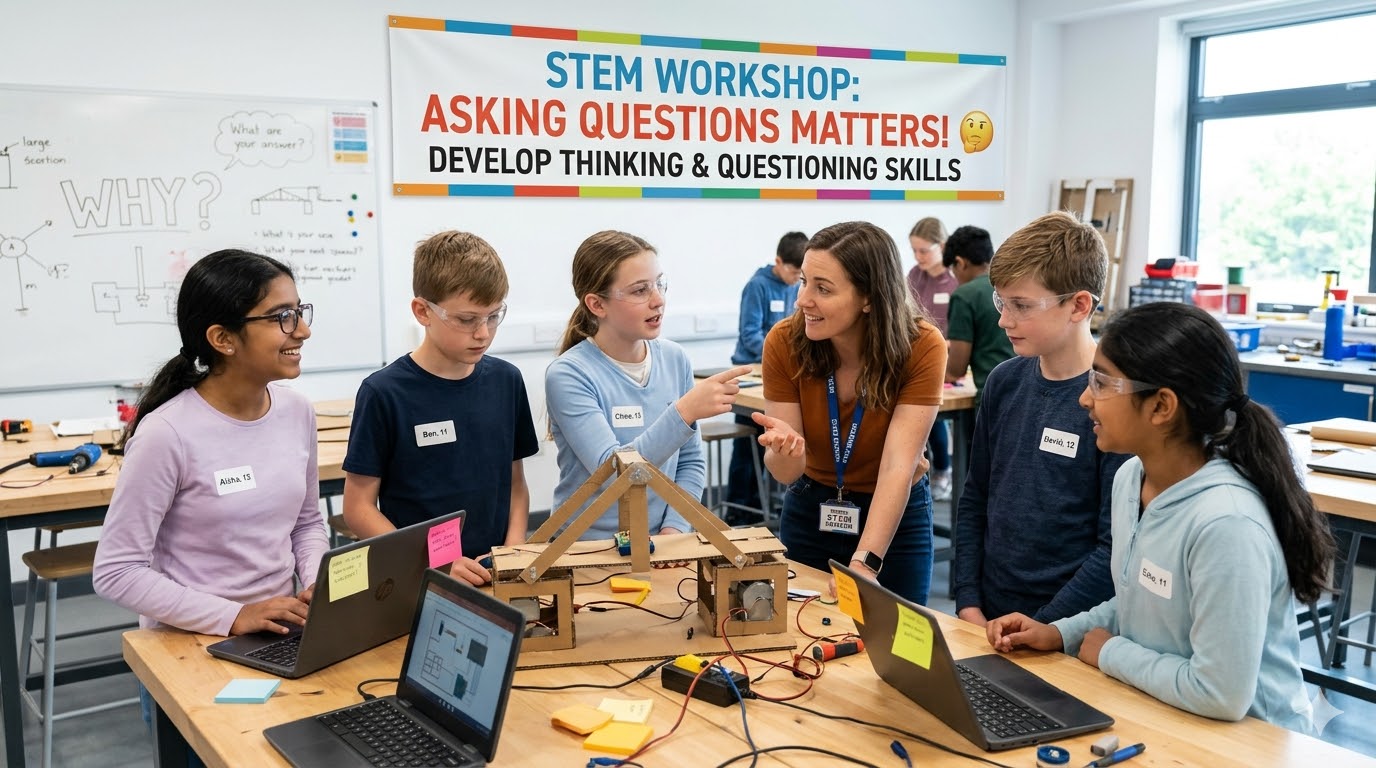
In recent years, standard classroom teaching has evolved dramatically. To prepare kids for future challenges, implementing STEM education for schools has become a necessity rather than a luxury. By allowing children to interact with hands-on science and STEM kits, we bridge the gap between theoretical knowledge and practical application. Furthermore, exposing young minds to modern technologies like AI and robotics in a dedicated, creative maker space environment significantly boosts their critical thinking, problem-solving abilities, and overall cognitive development.
Benefits of educating a child
Mental aspect
The first and foremost step of knowledge children are exposed to is the School. The School provides an opportunity for them to gain knowledge in various fields of Education such as literature, people, history, mathematics, science, politics, and different other subjects. When the children are exposed to the world coming from various cultural sources, then their experience and existence in the world become vast and well-rounded.
Knowledge
Education not only offers smart book knowledge for children, but it also provides experience in other areas such as history, art, and music. When it comes to Education, there is no limit for it like the sky. Lead a life full of learning opportunities, read a book, teach yourself and others, take classes. Age is not a bar in Education.
Education teaches each child how to set goals and make them feel proud when they accomplish their goals. This is a critical role in a successful adult life. Education helps you to know more about other morals and values to lead a well-balanced, open mind.
Financial Independence
To get a good job, to be in a good position and to be financially stable in your life, you need to be educated which means you are an expert in one particular field or well trained in different areas. In the real world, Education is more essential to learn, thrive, and excel. It provides the necessary foundation for students to grow into self-sufficient, confident adults who can contribute economically to society.
Takeaway
Education is the one which plays a prominent role in each person's life. It not only teaches but also helps in building character, opinions, and intellect. Real intelligence is what we gain from our Education and continue to improve it throughout our life. By combining traditional morals with innovative, hands-on learning, we give our children the absolute best chance to succeed in an ever-changing world.