Why STEM?
Building the skills that matter most for the future




What is Design Thinking?
A mindset and methodology that puts the user at the centre of every solution.

Problem-Solving Reimagined
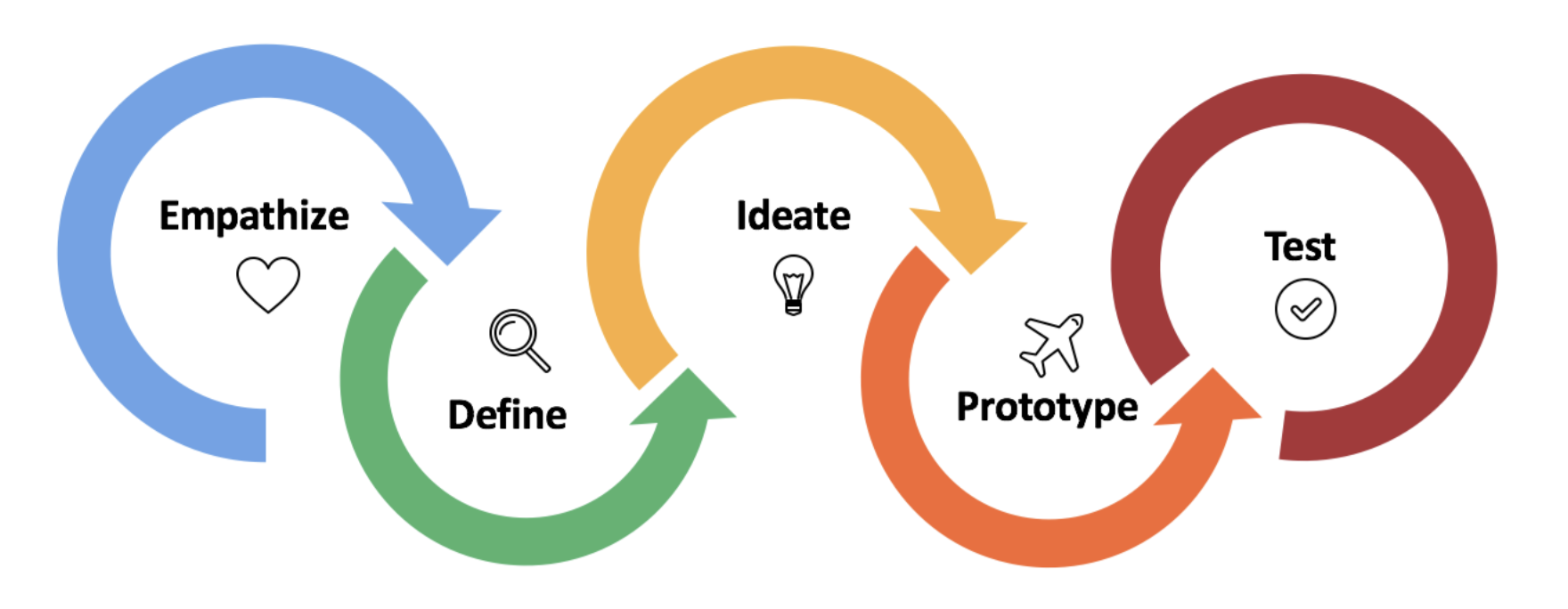
Design Thinking is a non-linear, iterative problem-solving approach originally developed at Stanford's d.school. It shifts students away from guessing solutions and towards deep understanding of the people they are designing for.
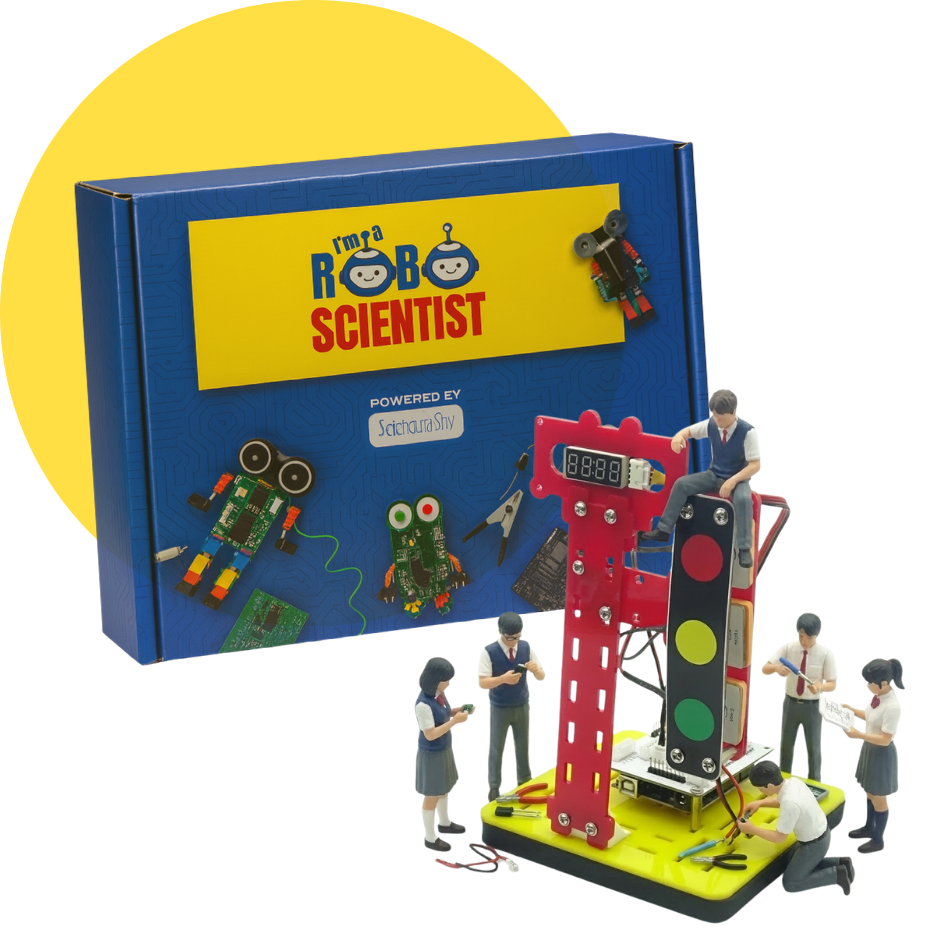
In the RoboScientist program, students don't just build robots — they tackle genuine community challenges using the Design Thinking framework, combining electronics, coding, and creative empathy to produce meaningful real-world products.
The 5 Phases
Each phase builds on the last, creating a complete innovation cycle.
1. Empathize
Students go into the field to observe, interview, and deeply understand the people they're designing for — their needs, frustrations, and behaviours.
- Conduct user interviews
- Observe real environments
- Build empathy maps
2. Define
Teams synthesise their empathy research into a clear, actionable problem statement — ensuring everyone is solving the same, right problem.
- Analyse research findings
- Write a Point-of-View (POV)
- Frame "How Might We" questions
3. Ideate
With the problem clearly defined, students brainstorm freely — no idea is too wild. Quantity is encouraged over quality at this stage.
- Brainstorm without judgment
- Mind mapping & sketching
- Vote on best concepts
4. Prototype
Students build quick, low-cost versions of their best ideas to explore possibilities and fail fast — learning more from a rough prototype than a perfect plan.
- Build with electronics & code
- Iterate rapidly
- Document learnings
5. Test
Prototypes are placed in front of real users. Feedback is collected, ideas are refined, and the team loops back through earlier phases until the solution truly works.
- User testing sessions
- Gather structured feedback
- Refine & re-prototype
Student Learning Journey
From empathising with a problem to building a real-world product — see how Design Thinking comes to life in the classroom.
1. Design Thinking in Action
Students begin by going into their community to understand a real problem. They conduct interviews, observe environments, and build empathy maps to define a clear challenge worth solving.
2. Building a Working Prototype
Armed with a clear problem definition and their best idea, students move into the prototype phase. They learn the complete process of creating a functional prototype by combining electronics, coding, and testing — building to learn, not to impress.
3. Prototype to Product
After testing with real users and incorporating feedback, students refine their prototype into a polished, functional product model. This stage teaches iteration — the heart of Design Thinking — and gives students the confidence that their ideas can actually work.
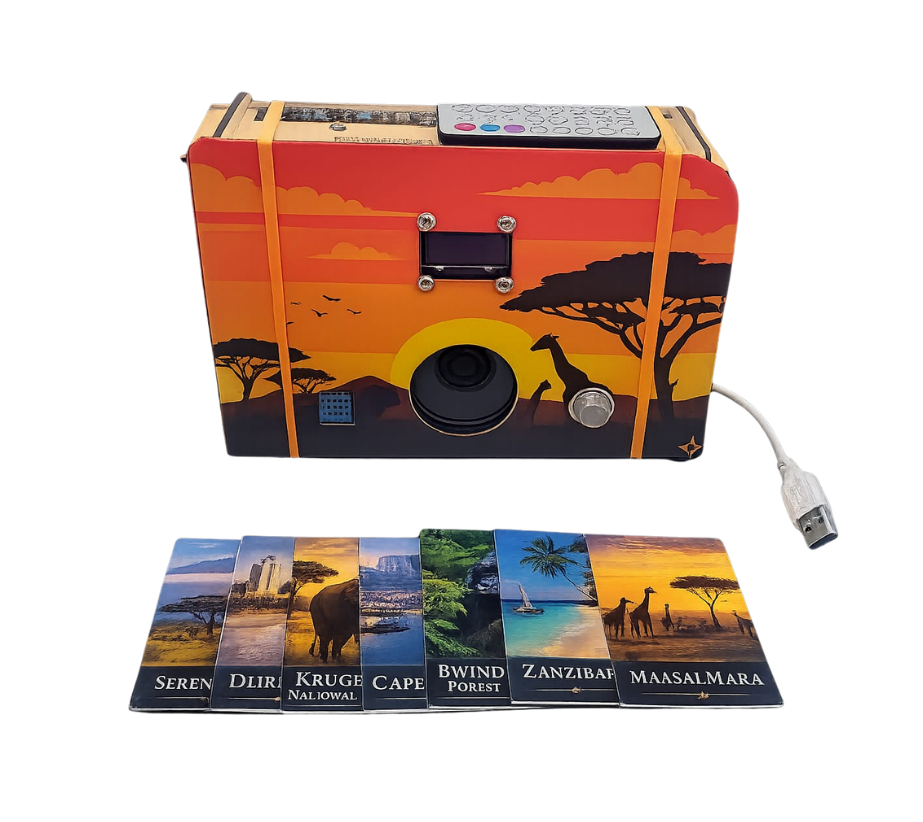
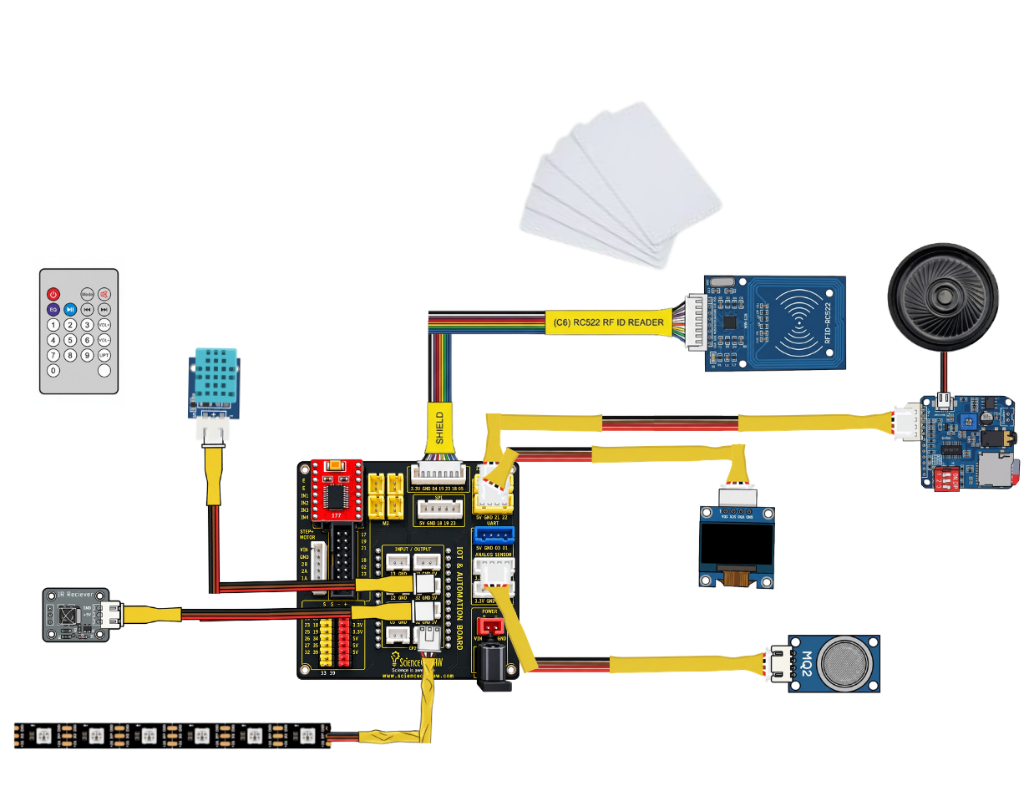
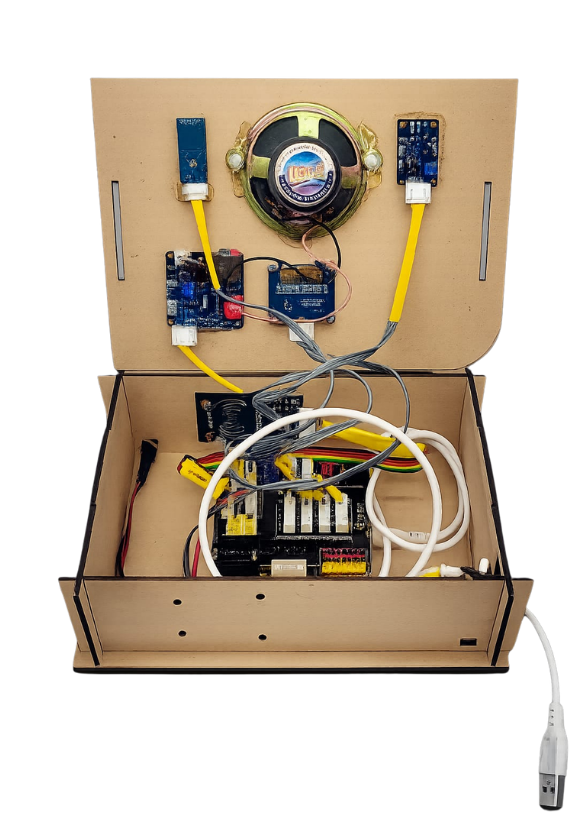
4. Smart Tourism Help Desk
A real student-built product that solved the tourism information problem — created entirely through the Design Thinking framework.
- RFID-based interactive tourism guide
- Tourists tap picture cards of tourist places
- System plays audio information about the selected place
- Displays live temperature, humidity & air quality
- Uses decorative lights for visual engagement
- Makes tourism information simple, engaging & self-service
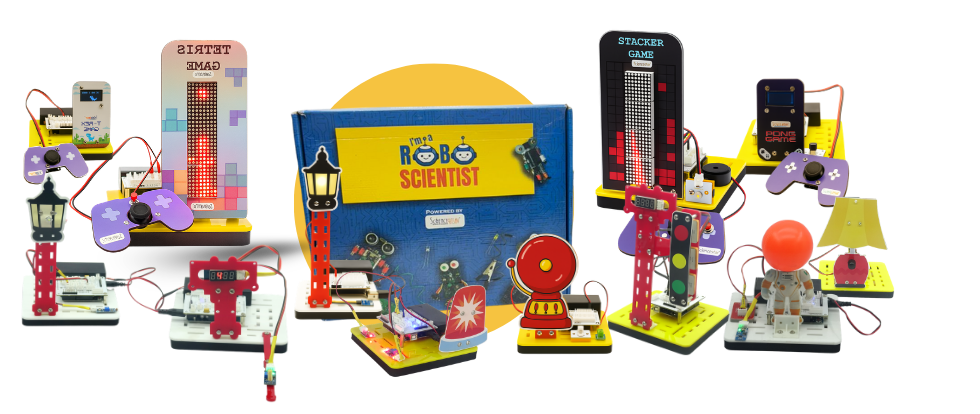
Product Overview
Community Solutions through Tools, Ideas, and Engineering
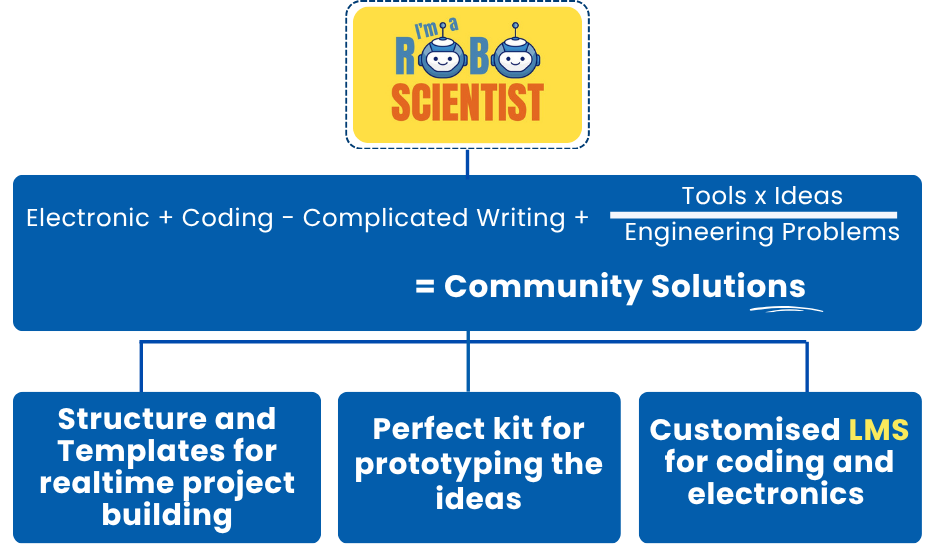
Structure & Templates
Ready-to-use templates for realtime project building.
Perfect Kit
The perfect kit for prototyping ideas with electronics and coding capabilities.
Customised LMS
A tailored Learning Management System for coding and electronics.
Program Offerings
Tailored curriculum for every age group
Creative Automation
Grades 4 to 9
- Basic Automation
- Introduction to STEM
Creative Automation
+ Sensational Sensors
Grades 4 to 9
- Advanced Automation
- Sensor Integration
Creative Automation
+ Sensational Sensors
+ Fun With Robotics
Grades 4 to 9
- Full Robotics Kit
- Programming
- Real-world Projects
Advanced
Robotics & IoT
Grades 6 to 9
- Complex Circuits
- IoT Applications
- Sensor Integration
Expert
Engineering
Grades 6 to 9
- System Design
- Advanced Coding
- Prototype Building
AI Specialization
Program
Grades 6 to 9
- Machine Learning
- Data Analysis
- Python Programming
Skills Developed Through Design Thinking
Our program builds the 5C skills every future innovator needs.
Bring Design Thinking
to Your School
Give your students the most powerful problem-solving framework in the world — combined with hands-on STEM, Robotics, IoT & AI implementation.